

费里斯·韦伯斯特
编辑
67
电影
0
电视节目
From Wikipedia, the free encyclopedia
Ferris Webster (April 29, 1912 – February 4, 1989) was an American film editor with approximately seventy-two film credits. He was nominated for Academy Awards for Best Film Editing for his work on Blackboard Jungle (1955), The Manchurian Candidate (1962), and The Great Escape (1963).
Webster was raised in the state of Washington, and was a student at the University of Southern California, where he was an outstanding track and field athlete. He was trained as an editor at the MGM Studios, and received his first feature-film credit in 1943 for Harrigan's Kid. At MGM, Webster edited six films with director Vincente Minnelli: Undercurrent (1946), Madame Bovary (1949), Father of the Bride (1950), Father's Little Dividend (1951), The Long, Long Trailer (1954), and Tea and Sympathy (1956). Film critic Bruce Eder has written of Madame Bovay that, "the cutting of the film in the gala ball sequence, in particular, was a marvel of the editor's art in the service of old Hollywood's restrained, elegant storytelling." In the mid-1950s, he edited three films with director Richard Brooks: Blackboard Jungle (1955), Something of Value (1957), and Cat on a Hot Tin Roof (1958); Webster received his first nomination for the Academy Award for Blackboard Jungle. His last film at MGM was Key Witness (1960).
Bruce Eder has written, "If ever a film editor deserved public recognition in the 1960s, it was Ferris Webster." Webster edited the three films of director John Frankenheimer's "paranoia trilogy": The Manchurian Candidate (1962), Seven Days in May (1964), and Seconds (1966). Eder writes that The Manchurian Candidate was "the editor's magnum opus. The shooting, cutting, and intercutting of one extended brainwashing sequence, seen from multiple points-of-view, is still striking decades later, and the movie earned Webster his second Academy Award nomination." Frankenheimer cast Webster in his only appearance as a film actor, as Air Force Gen. Bernard "Barney" Rutkowski in Seven Days in May.
Webster was nominated for an Academy Award for the editing of The Great Escape (1963), which was directed by John Sturges. Webster and Sturges' notable collaboration included fifteen films between 1950 and 1972, which is about half of Sturges' films in that period. It started with The Magnificent Yankee and Mystery Street (1950), and included The Law and Jake Wade (1958), The Magnificent Seven (1960), and Ice Station Zebra (1968). The final film of their collaboration was Joe Kidd (1972), which was near the end of Sturges' career.
Joe Kidd starred Clint Eastwood. In the last phase of his career, Webster edited and co-edited eight films that were directed by Eastwood, starting with High Plains Drifter (1973), which was Eastwood's second film as a director. Webster edited Breezy (1973), The Eiger Sanction (1975), The Outlaw Josey Wales (1976), The Gauntlet (1977), Bronco Billy (1980), Firefox (1982) and Honkytonk Man (both 1982). These latter two films with Eastwood concluded Webster's career as an editor, apparently after a falling-out between the two men.
Additional credits include The Picture of Dorian Gray (1945), Lili (1953), Forbidden Planet (1956), Les Girls (1957), Divorce American Style (1967).
相机背后

伟大的七人
编辑

恐惧大使
编辑

恶魔岛:不可能逃脱
编辑

大逃亡
编辑

逃亡者乔西·威尔士
编辑

万能 44
编辑

死者的复仇
编辑

无惧死亡
编辑

未知的星球
编辑

叛乱斗士
编辑

雷电和莱特福特
编辑

火狐、火狐
编辑

乔·基德
编辑

自杀路线
编辑

另一位汉密尔顿先生
编辑

山上杀人事件
编辑
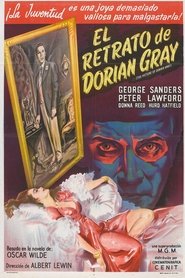
道林·格雷的肖像
编辑

热屋顶上的猫
编辑

大乱斗
编辑

组织机构
编辑

斑马极地站
编辑

野马比利
编辑

新娘的父亲
编辑

绿宅
编辑

善良的女士
编辑

五月七日
编辑
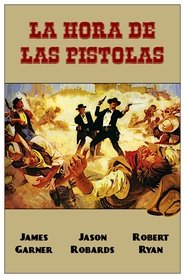
枪声时刻
编辑

邪恶的种子
编辑

The Satan Bug
编辑

El pistolero invencible
编辑