


Juan Calvo
演员
68
电影
0
电视节目
Juan Calvo was a Spanish actor. He began his contact with cinema in 1934, with a small part in the sound version of Florián Rey's La hermana San Sulpicio. During part of the war he was representing theatrical plays in the national zone, but at the end of the war he abandoned the stage to devote himself fully to the cinema, whose filmography consists of about eighty titles. In 1938 he shot in the German studios of Ufa, Suspiros de España, by Benito Perojo, and the following year he finished shooting the film by Fernando Delgado, El genio alegre, begun in 1936, which had remained unfinished due to the outbreak of the Civil War. After shooting Florián Rey's La Dolores in 1940, he spent a couple of seasons filming between Spain and Italy, where he stood out in Ladislao Vajda's film Conjura en Venecia. In the first half of this decade he also stood out in two other films by this director, El testamento del Virrey and Cinco lobitos, as well as in Raza and El escándalo, by José Luis Sáenz de Heredia; Huella de luz, El clavo, Eloísa está debajo de un almendro and Tierra sedienta, by Rafael Gil; Boda en el infierno and Los últimos de Filipinas, by Antonio Román, or Tuvo la culpa Adán and Ella, él y sus millones, by Juan de Orduña. In 1946 he moved to Mexico, where he filmed until 1953, although he finished filming Don Quixote de la Mancha for Rafael Gil in Madrid in 1947, excelling in his interpretation of Sancho Panza.
In his Aztec journey he worked under the orders of some Spanish directors who were in exile, standing out in Bel Ami, la historia de un canalla (Bel Ami, the story of a scoundrel), by Antonio Momplet. It is also worth mentioning his performance in Allá en el rancho grande, by Fernando de Fuentes. After filming La venenosa, La virgen desnuda and El mártir del calvario for Miguel Morayta, and, finally, Educando a papá, for Fernando Soler, he returned to film again in Spain, although at this stage he definitively stopped alternating with theater. Of his activity on the screen, in this decade he stands out in the film by Ladislao Vajda, Marcelino, pan y vino, in which he gave a memorable performance in the character of Fray Papilla, for which he received the Círculo de Escritores Cinematográficos Award in 1955, an entity that also distinguished him the following year for his work in Calabuch, a film by Berlanga, which gave him the same year the award of the Sindicato Nacional del Espectáculo (National Union of the Spectacle). He also shot for Vajda, Aventuras del barbero de Sevilla, Tarde de toros and Mi tío Jacinto, and for Berlanga, Los jueves, milagro, as well as in Historias de la radio and in Diez fusiles esperan, for Sáenz de Heredia. His last screen appearance was in 1961, in Fray Escoba, by Ramón Torrado.
In his long cinematographic history, he was mainly cast in the roles of bullfighting impresario and businessman, often with the repeated image of an angry man, with a Havana cigar between his fingers, although it was also common that behind that interpretative mask he was allowed to show off his bonhomie.
That easy-going spirit was consubstantial in him. He always stood out for his very personal voice, which he had undoubtedly educated in his years of work in the theater.
作为演员/演员

马塞林,面包和酒
Fray Papilla

弥天大谎
Paulino Sándalo

Il conte Max
zio Giovanni

Error 500 (Server Error)!!1500.That’s an error.There was an error. Please try again later.That’s all we know.
Don César

Calabuch
马蒂亚斯

骗子们
Belilla

L'uomo dai calzoni corti

Fray Escoba
Fray Barragán

绞刑架肉
Lorenzo Ruiz

Diez fusiles esperan
Capellán

拉曼恰的堂吉诃德
桑乔·潘萨
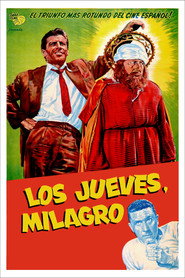
Los jueves, milagro
Don Antonio

Mi tío Jacinto
Used Clothing Salesman

Historias de la radio
Señor gordo

Goyescas
Patillas

Hermoso ideal
Don Pedro Rubio

亚当是罪魁祸首
Adán Olmedo de Alcaraz

Solo para hombres

Suspiros de España

Correo de Indias

Huella de luz
麦克风

Martes y trece
Inspector de policía

La mujer de todos
Conde

现象
Ramón Fernández

Quanto sei bella Roma
Sor Checco

有毒的
Mr. Mullich

拉扎
El Campesino

丑闻

La donna che venne dal mare
米格尔

Vivillo desde chiquillo